

Quick answer
The Johnston Canyon winter hike follows the same 2.7-kilometer path to the Lower Falls and 5.4-kilometer round trip to the Upper Falls, but winter conditions add significant time and require ice cleats or microspikes for the packed snow and ice surface. The trail remains open year-round, though the catwalk sections become narrow single-file routes when snow reduces usable width, and temperatures regularly drop below -20°C in January and February.
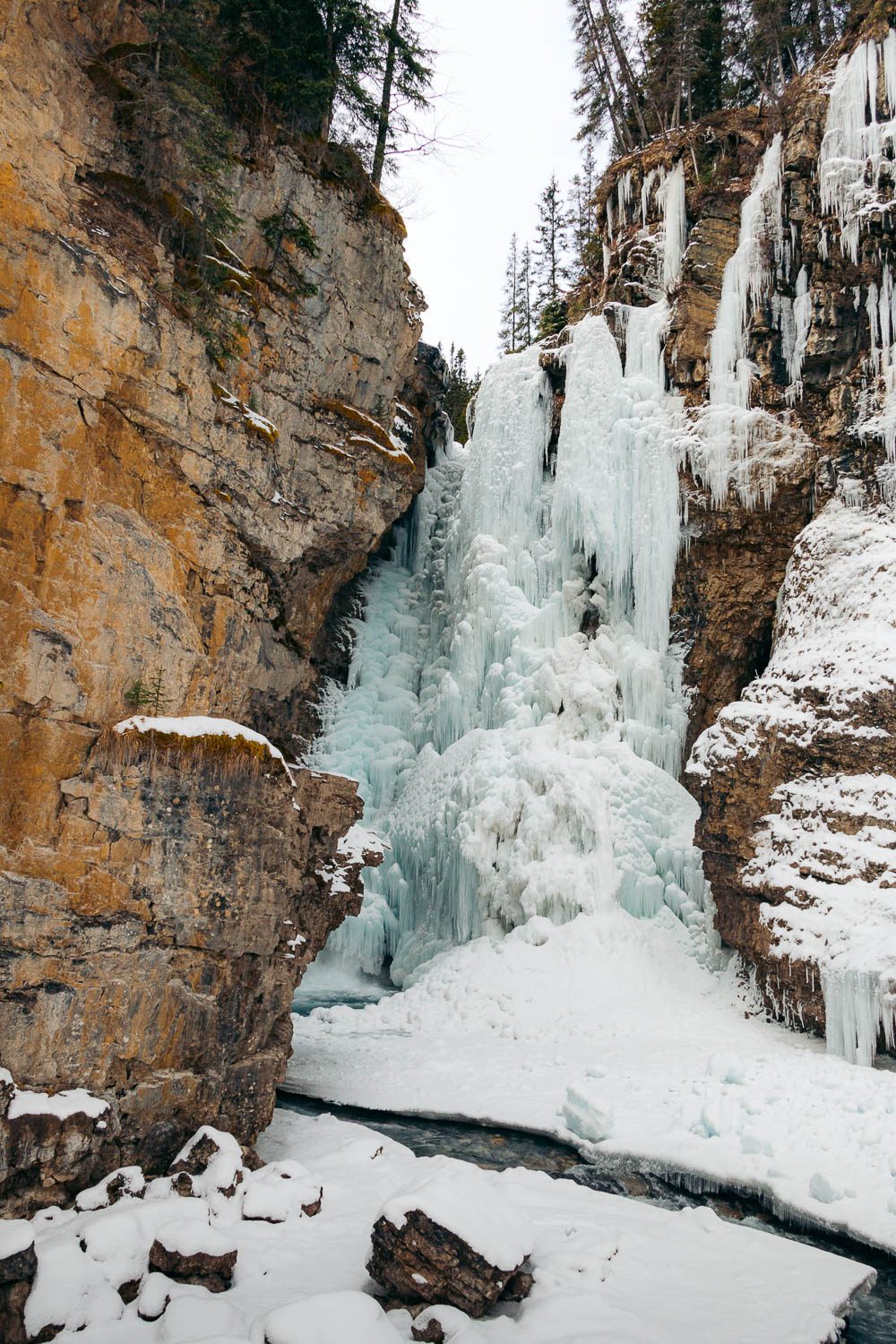
The creek freezes in discrete stages, building ice columns from mist and spray until the Lower Falls becomes a 10-meter frozen curtain by mid-December. That transformation draws winter visitors in numbers that rival summer, but the seasonal crowds concentrate in a shorter window—most arrive between 10 a.m. and 2 p.m., when the parking area along Bow Valley Pkwy reaches capacity and roadside overflow creates safety concerns. Winter trail surfaces bear little resemblance to the summer boardwalk experience. Packed snow and verglas coat the metal catwalks, and the limestone tunnel sections trap cold air, maintaining ice even during brief warm spells. Traction devices are not optional—bare boots lose grip within the first hundred meters, and the exposed catwalk railings above the canyon floor leave no room for recovery from a slip. Microspikes with at least 10 points per foot handle the compacted trail surface; full crampons are unnecessary and catch on the boardwalk. Daylight governs the practical hiking window more than posted hours. Sunrise arrives after 8 a.m. in December and January, and the canyon walls block direct sun until mid-morning, keeping the trail in shadow and temperatures 5-8 degrees colder than open terrain. Headlamps extend the usable day at both ends, but most hikers choose the dawn start to claim parking and finish before the midday surge. The trail sees use well into evening during the shoulder months of November and March, when longer days and moderating temperatures make afternoon departures viable. The Upper Falls adds 2.7 kilometers and roughly 90 minutes to the round trip, but winter ice makes the ascent more demanding than the summer grade suggests. The switchback section above the Lower Falls narrows under snow, and the final approach to the upper cascade requires careful foot placement on steep grades with limited runoff. Canyon ice formations grow throughout the season, reaching peak mass in February before the March melt begins to hollow them from behind.
“The limestone tunnel sections trap cold air, maintaining ice even during brief warm spells.”
Best Time and Arrival Windows for Your Johnston Canyon Winter Hike
The best arrival window is 00:00–08:00 to bypass severe midday parking congestion. Arriving during these early hours ensures a quieter experience on the trail before peak visitor volumes occur.
Weekday mornings
Minimal congestion—
Visiting midweek during the early morning window offers the most solitude.
December to February
Moderate to highCold, -5°C to -15°C
Trails are icy and require traction devices despite peak winter crowds.
March and April
ModerateCool, -2°C to 5°C
Thawing conditions may create variable ice surfaces throughout the day.
Verdict: The optimal time for a hike is Tuesday to Thursday between 00:00–08:00 during the winter months of January or February.
Operating Hours for the Johnston Canyon Winter Hike
Johnston Canyon is accessible to the public throughout the week to accommodate winter hiking schedules.
| Monday | 00:00–23:59 | |
|---|---|---|
| Tuesday | 00:00–23:59 | |
| Wednesday | 00:00–23:59 | |
| Thursday | 00:00–23:59 | |
| Friday | 00:00–23:59 | |
| Saturday | 00:00–23:59 | |
| Sunday | 00:00–23:59 |
Getting to the Johnston Canyon Winter Hike
Johnston Canyon is located along the Bow Valley Pkwy, Improvement District No. 9, AB, Canada. The most practical way to reach the trailhead is by personal vehicle or seasonal shuttle service.
Trans-Canada Hwy (Hwy 1) to Bow Valley Pkwy (Hwy 1A)
Roam Transit Route 9 from Banff townsite
Private hire from Banff town center
Mistakes to Avoid on Your Johnston Canyon Winter Hike
Winter conditions on the Johnston Canyon trail create specific hazards that catch unprepared visitors off guard. Most incidents stem from inadequate traction and straying from the maintained catwalks.
Wearing hiking boots without ice cleats or crampons
The compacted snow and ice covering the trail and catwalks become mirror-slick by mid-morning. Micro-spikes or strap-on ice cleats are non-negotiable—regular boot treads will not grip.
Leaving the elevated catwalks to walk on the frozen creek
The ice surface is unstable and conceals gaps, moving water, and variable thickness. Stay on the steel catwalks and wooden boardwalks at all times, even when they appear more crowded.
Underestimating return time in fading winter light
Sunset arrives before 17:00 from November through February, and the narrow canyon loses usable light even earlier. Allow 2.5–3 hours round-trip to the Upper Falls and carry a headlamp with spare batteries.
Ignoring posted avalanche warnings or closure signs
Parks Canada closes sections when avalanche risk elevates or ice buildup threatens the catwalks. Bypassing closures puts you in the path of controlled avalanche work and unsupported structures.
Essential Gear Checklist for the Johnston Canyon Winter Hike
Winter conditions demand specific safety equipment and early preparation.
-
Purchase or rent ice cleats before you go — The trail surface is solid ice from December through March and impossible to navigate safely in regular boots.
-
Secure your Banff National Park pass online — Digital passes eliminate gate delays and guarantee entry during high-traffic winter weekends.
-
Pack extra layers and hand warmers — Canyon temperatures drop 5–10°C below town readings due to shade and elevation.
-
Charge your phone fully the night before — Cold drains batteries fast and cell service is unavailable past the trailhead parking lot.
-
Check Parks Canada avalanche bulletins that morning — Trail closures happen without warning when conditions deteriorate overnight.
Check availability
Frequently Asked Questions About Johnston Canyon Winter Hike
Everything you need to know about johnston canyon winter hike